
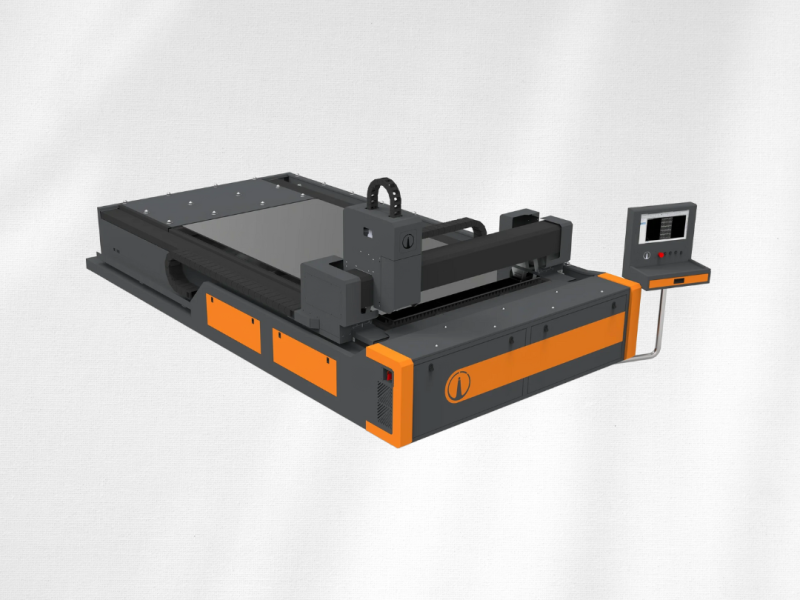
What is Laser Cutting Technology?
Laser cutting technology uses a concentrated beam of high-energy light to cut, melt, or vaporize material. The laser beam is focused onto the surface of the material through a cutting head, creating a very narrow cutting line with high precision.
The process is controlled through CNC programming, which allows the machine to cut complex shapes, curves, holes, and patterns with exceptional accuracy and repeatability. Laser cutting can be used for stainless steel, mild steel, aluminium, brass, copper, acrylic, wood, and many other materials.
How Does a Laser Cutting Machine Work?
A laser cutting machine works through several steps:
- The laser source generates a high-intensity beam.
- The beam is directed through fiber optics or mirrors.
- A focusing lens concentrates the beam onto the material surface.
- The heat melts, burns, or vaporizes the material.
- Assist gases such as oxygen, nitrogen, or compressed air remove molten material from the cutting area.
- The CNC system controls the movement of the cutting head for precise cutting.
The focused laser beam can create a cutting diameter smaller than 0.5 mm, making it ideal for high-precision industrial applications.
Types of Laser Technology Used in Cutting Machines
The two most common laser technologies used in cutting machines are:
Fiber Laser Technology
Fiber laser technology uses optical fiber as the laser medium. The laser beam is generated by diodes and amplified inside a fiber optic cable before reaching the cutting head.
Fiber lasers are mainly used for cutting metals such as stainless steel, carbon steel, aluminium, copper, brass, and titanium. They are highly efficient, require low maintenance, and deliver excellent cutting speed and precision. Fiber lasers are especially effective for reflective materials, which are difficult for traditional CO2 machines.
CO2 Laser Technology
CO2 laser technology uses a gas-filled tube containing carbon dioxide to generate the laser beam. Mirrors guide the beam to the cutting head.
CO2 laser machines are generally used for cutting non-metal materials such as wood, acrylic, leather, plastic, fabric, and rubber. They are also popular for engraving applications because they can provide smoother edges on organic materials.
Fiber Laser vs CO2 Laser Technology
| Feature | Fiber Laser | CO2 Laser |
|---|---|---|
| Best for | Metals | Non-metals |
| Wavelength | Around 1.06 µm | Around 10.6 µm |
| Speed | Faster on thin metals | Better for wood and acrylic |
| Maintenance | Low | Higher |
| Energy Efficiency | High | Lower |
| Reflective Materials | Excellent | Limited |
| Operating Cost | Lower | Higher |
Fiber lasers can cut thin metals several times faster than CO2 systems, especially in stainless steel applications. They also consume less power and require less maintenance because they do not use mirrors or gas-filled tubes. CO2 lasers remain useful for businesses focused on wood, acrylic, plastic, and decorative applications.
Key Advantages of Modern Fiber Laser Technology
Modern fiber laser cutting machines offer several important benefits:
- High cutting speed
- Excellent precision and repeatability
- Low maintenance requirements
- Reduced energy consumption
- Minimal heat distortion
- Better cut quality
- Ability to cut reflective materials
- Lower operating costs
- Higher productivity
Because of these advantages, fiber laser technology is becoming the preferred choice for industrial metal cutting applications.
Industries Using Laser Cutting Machines
Laser cutting technology is widely used across multiple industries, including:
- Sheet metal fabrication
- Automotive manufacturing
- Kitchen equipment production
- Furniture manufacturing
- Electrical panels
- Elevator components
- Agricultural machinery
- Signage and decorative products
- Aerospace and engineering industries


5
Future of Laser Cutting Technology
The future of laser cutting technology is moving toward higher automation, faster cutting speeds, AI-based nesting software, smart production monitoring, and lower power consumption. Fiber laser systems continue to gain popularity because of their efficiency, compact size, and ability to handle high-volume industrial production.
As industries demand faster production and better quality, laser cutting machines will continue to play a major role in modern manufacturing.